Toll free number

Plywood Upcycling: Transforming Scraps into Treasures

Have you ever thought about what happens to all those leftover scraps once the project is complete? 

Often, they end up collecting dust in the corner of the garage or worse, tossed in the bin. 

But what if I told you that these leftover pieces of plywood hold the potential to be transformed into stunning and functional treasures for your home?

Yep, you heard that right! 

Plywood upcycling is a fantastic way to breathe new life into leftover materials while including a touch of personalization and eco-consciousness into your living space.

Why Upcycle Plywood?

There are several reasons why upcycling plywood is a brilliant idea:

Eco-friendly: It reduces waste and gives new purpose to materials that would otherwise end up in landfills.

Cost-effective: You’re using what you already have, so it’s a budget-friendly way to create new décor or furniture.

Unique and Customizable: Upcycled pieces are one-of-a-kind, allowing you to create something that perfectly matches your style and needs.

Fun and Rewarding: The process of transforming scrap into something beautiful can be incredibly satisfying.

Upcycling Inspiration for Every Room

Now that you’re on board with the idea of plywood upcycling, let’s explore some inspiring ideas for incorporating it into your home:

Living Room: Craft a stylish coffee table by stacking and securing plywood pieces of varying sizes. Add hairpin legs for a modern touch, or casters for an industrial vibe.

Kitchen: Create a hanging pot rack using plywood cut into geometric shapes. Paint it for a pop of color or stain it for a rustic look.

Bedroom: Build a headboard with a unique design using plywood scraps. You can paint a mural, add fabric panels, or keep it simple with a geometric pattern.

Bathroom: Give your bathroom a spa-like feel with a DIY plywood towel rack or a set of floating shelves for toiletries.

Home Office: Construct a multifunctional desk with plywood. Add cubbyholes for storage and customize them to fit your specific needs.

Tips for Successfully Upcycling Plywood

Plan your project: Sketch your design or find inspiration online before diving in.

Safety first: Always wear safety glasses and gloves when working with power tools.

Sand smooth: For a polished finish, sand down any rough edges on the plywood before painting or staining.

Get creative with paint and stain: Don’t be afraid to experiment with colors and finishes to create a unique look.

Think outside the box: Plywood can be cut into various shapes and sizes, so don’t limit yourself to traditional furniture designs.

In A Nutshell

With a little planning and creativity, you can transform leftover plywood scraps into beautiful and functional pieces that will add personality and charm to your home. 

So, next time you have a leftover piece of plywood, don’t toss it! Build up your upcycling spirit and create something truly special.

Quick Links:

Plywood Price | Plywood Price in India | Calibrated Plywood Price | Gurjan Plywood | Fire Retardant Plywood | Waterproof Plywood | Marine Plywood Price
The Plywood Lifecycle: From Forest to Finished Product

Plywood is an essential material in construction, furniture-making, and various other industries. It’s a versatile material known for its strength, durability, and affordability. 

But have you ever wondered about the process of plywood creation? 

From the serene depths of the forest to the sleek finish of a polished product, let’s unravel the journey of plywood manufacturing.

Step-by-Step: The Journey from Log to Finished Product in Plywood Manufacturing

Step 1: Harvesting From the Forest

It all begins in the heart of the forest. Quality plywood starts with the selection of the right timber. Trees are carefully chosen, ensuring they are mature and possess the ideal characteristics for plywood production. 

Sustainable forestry practices are crucial to maintain ecological balance and ensure a continuous supply of raw materials.

Step 2: Log Assessment & Preparation

Once the logs are harvested, they are transported to the plywood manufacturing facility. Here, skilled workers inspect each log and select the best ones for processing. 

The logs are evaluated based on size, straightness, and absence of defects such as knots and cracks.

Step 3: Debarking

Before the logs can be transformed into plywood, they need to be stripped of their bark. 

Debarking machines are used to remove the outer layer, preparing the logs for the next stage of processing.

Step 4: Veneer Peeling 

After debarking, the logs are ready for peeling. They are mounted on a lathe, which rotates them against a sharp blade. 

This process produces thin layers of wood called veneers. The quality of the veneers depends on the skill of the operator and the precision of the machinery.

Step 5: Formation of Continuous Veneer Sheets

The veneers are then clipped to size and sorted based on quality. These veneers are then laid out in layers, with the grain direction alternating between each layer. 

This cross-grain construction is what provides the plywood its strength and stability.

Step 6: Application of Adhesive

Once the layers are arranged, adhesive is applied to bond them together. The type of adhesive used depends on the intended application of the plywood. 

Phenol formaldehyde and urea formaldehyde are commonly used adhesives known for their strength and water resistance.

Step 7: Hydraulic Pressing

The glued veneers are then placed in a hydraulic press, where heat and pressure are applied. 

This process ensures proper adhesion between the layers and results in a solid, homogeneous panel.

Step 8: Trimming, Sanding and Finishing

After pressing, the plywood panels are trimmed to size and sanded to achieve a smooth surface. 

Additional finishing processes may include the application of coatings or laminates to enhance durability and aesthetics.

Closing Remarks

The journey from forest to finished product is an art of craftsmanship. Each step in the plywood manufacturing process requires skill, precision, and attention to detail. 

From the careful selection of timber to the meticulous assembly of layers, every aspect contributes to the quality and performance of the final product. 

As consumers, it’s important to appreciate the effort that goes into creating the materials we use every day and to support sustainable practices that ensure the longevity of our natural resources.

Quick Links:

Plywood Price | Plywood Price in India | Calibrated Plywood Price | Gurjan Plywood | Fire Retardant Plywood | Waterproof Plywood | Marine Plywood Price
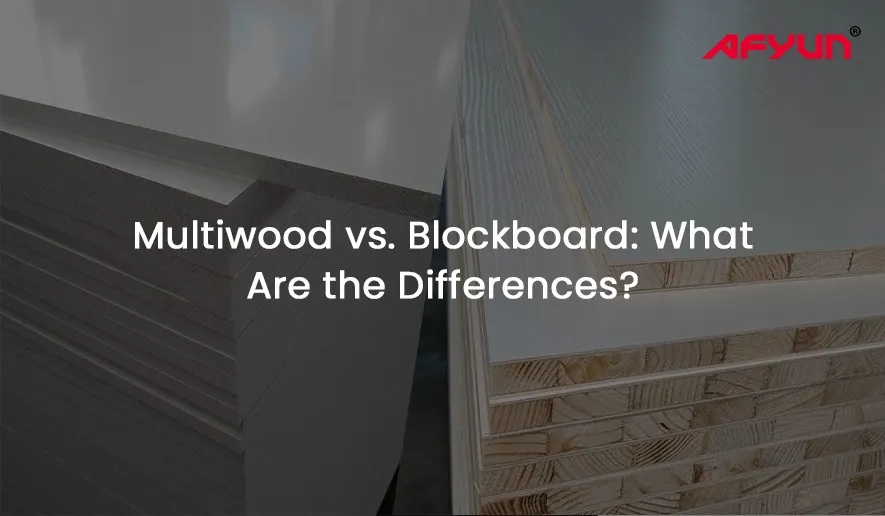
Multiwood vs. Blockboard: What Are the Differences?

Multiwood vs. Blockboard: What Are the Differences

Understanding the differences between Multiwood and Blockboard is essential for anyone planning a woodworking project, interior fit-outs, or furniture manufacturing. Both materials serve similar purposes like lightweight, strong substrates for veneers and laminates, but they differ in composition, performance, cost, and ideal use cases. 

This guide dives into the key distinctions, how each material behaves in real-world applications, and practical tips to choose the right option for your project.

What Multiwood is and how it is made

Multiwood, often referred to as plywood in many markets, is created by gluing together several thin layers (plies) of wood veneer at right angles. Each layer’s grain direction alternates with every sheet, which yields a strong, stable panel that resists warping under changes in humidity and temperature. The core concept of Multiwood is to achieve greater strength-to-weight ratios through a cross-laminated structure.

  • Layers are bonded with resin-based adhesives under heat and pressure.
  • The number of plies and veneer thickness determine the panel’s strength, rigidity, and cost.
  • Quality depends on veneer species, adhesive type, and manufacturing standards (e.g., E1/E0 formaldehyde emissions, BWP, or MR grades for interior use).

What Blockboard is and how it is made

Blockboard is composed of a core of solid wood strips (blocks) sandwiched between two outer veneers or faces. The blocks are typically arranged in a uniform pattern and bonded with adhesive to create a solid, relatively thick panel. Blockboard often offers a smoother surface and can be more economical for certain thickness ranges.

  • Core consists of horizontal or vertical wooden strips (blocks) aligned with grain in the same direction.
  • Outer veneers provide a smooth finish, suitable for veneering or laminating.
  • Some Blockboards use Poplar, Pine, or hardwood strips, which affects weight and cost.

Key differences at a glance

  • Core construction: Multiwood uses cross-laminated veneer plies; Blockboard uses wood blocks with outer veneers.
  • Stability: Multiwood generally provides better dimensional stability and less tendency to warp with humidity changes.
  • Surface quality: Blockboard can offer a smoother, sometimes more uniform surface for veneering, depending on core quality.
  • Weight: Multiwood is typically lighter per given thickness than Blockboard, though this varies with wood species and exact construction.
  • Cost: Blockboard is often more economical for thicker panels, while Multiwood can be more expensive due to veneer quality and manufacturing complexity.
  • Applications: Multiwood excels in structural panels, cabinetry, and furniture requiring stability; Blockboard is favored for lightweight cupboards, partition panels, and case goods needing a smooth face for veneers.

Performance considerations

  • Moisture resistance: For interior use, both materials can be MR ( moisture resistant) or MR-grade. If exposed to high humidity or occasional moisture, choose MR-graded Multiwood with appropriate core and adhesives; seal edges to protect against moisture ingress.
  • Edge work: Multiwood edges often reveal veneers; Blockboard edges show raw wood strips, which may require edge treatment or edging tape for a clean appearance.
  • Veneer compatibility: Both materials accept laminates and veneers well, but the surface planarity and density influence finish quality. Multiwood generally provides uniform hardness and less chance of springing when veneered.

Choosing the right material for common scenarios

  • Cabinetry and built-ins with high stability requirements: Multiwood offers superior dimensional stability and screw-holding capacity; ideal for tall cabinets and bookcases.
  • Lightweight interior partitions or decorative panels: Blockboard can be more cost-effective and easier to work with when high rigidity is not critical.
  • High-use furniture (doors, shelves, drawers): Multiwood is often preferred for better long-term stability and resistance to warping, especially in climates with fluctuating humidity.
  • Veneered surfaces requiring a flawless look: Blockboard’s outer veneers can sometimes yield a smoother appearance, but ensure the core is well bonded and free of voids for optimal veneer bonding.

Practical tips for selecting, cutting, and finishing

  • Verify core quality: Inspect for voids, gaps, or loose blocks in Blockboard. For Multiwood, check for consistent veneer thickness and absence of core gaps.
  • Adhesive and grade: Prefer MR (moisture resistant) or BWP (boiling water resistant) grades appropriate for interior or damp environments. For furniture, F.S. ( Furniture Grade) veneers can improve finish quality.
  • Edge finishing: Plan for edging strips or veneer to cover exposed edges, especially on Blockboard where blocks may be visible.
  • Fastening strategy: Pre-drill for screws, especially in Blockboard cores, to prevent splitting. Use appropriate fasteners and wood glue for additional strength.
  • Finishing approach: Sand with progressively finer grits, seal, and apply veneers or laminates using a high-quality adhesive roller or vacuum press for uniform bonding.

Cost, availability, and regional considerations

  • Availability varies by region and supplier; regional timber markets influence price and lead times.
  • If you’re working within a budget, compare total panel cost, including core material, veneer, edging, and hardware.
  • For high-end cabinetry or architectural projects where stability and finish quality are paramount, Multiwood with premium veneers is often worth the investment.

Care and maintenance recommendations

  • Avoid prolonged exposure to standing moisture or direct water contact.
  • Use humidity control in interiors to minimize panel swelling or contraction.
  • Periodically inspect joints and veneers; address delamination or edge damage promptly.

Ready to source the right panel for your project?

Multiwood and Blockboard each offer distinct advantages depending on your project goals, budget, and working environment. If you prioritize dimensional stability, screw-holding strength, and a high-end veneer finish for long-term durability, Multiwood is the solid choice. If you need a cost-effective, smooth-faced panel suitable for veneering and lighter-duty applications, Blockboard can be an excellent option.

Afyun provides a range of interior construction materials and turnkey solutions. Contact Afyun, the best plywood manufacturers in kerala today, to discuss your specifications and get expert recommendations tailored to your application.

Other Locations

Plywood Suppliers in Kerala | Plywood Suppliers in Bangalore | Plywood Suppliers in Chennai | Plywood Suppliers in Hyderabad | Plywood Manufacturers in Mangalore | Plywood Manufacturers in Coimbatore | Plywood Manufacturers in Tamilnadu | Plywood Manufacturers in Mysore | plywood manufacturers in india | Plywood Manufacturers in Kerala | Plywood Manufacturers in Bangalore | Plywood Manufacturers in Chennai | Plywood Manufacturers in Hyderabad | India to saudi plywood exporters | Fireman plywood

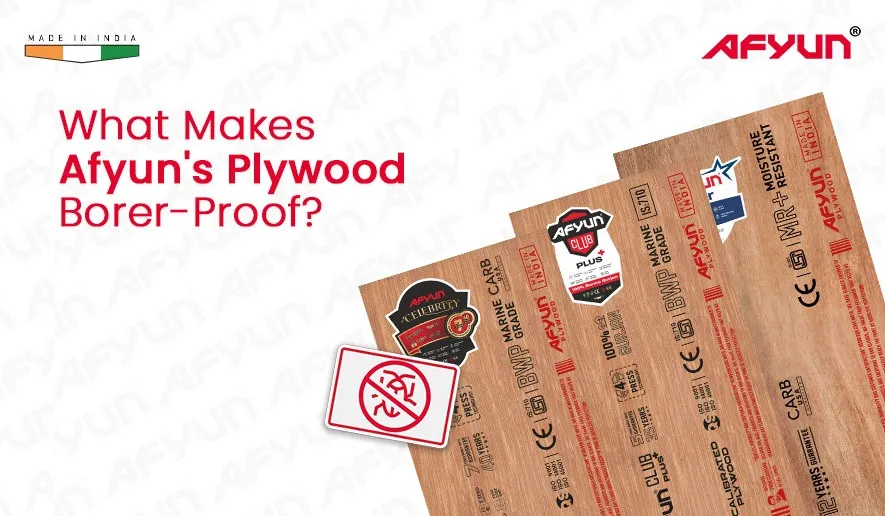
What Makes Afyun’s Plywood Borer-Proof?

Tiny holes in your furniture, mysterious piles of sawdust… these are the unwelcome calling cards of wood-boring insects. Borers can damage your furniture and even compromise the structural integrity of your home. But, our plywood is borer-proof. 

Let’s dive into the reasons. But, before that let’s see what exactly are these pests, and how can you protect your investments from their destructive habits. 

What are Borers?

Borers are insects that tunnel through wood to create nesting sites and lay eggs. They weaken the wood and can cause structural damage, leaving behind telltale signs like small holes and sawdust.

How are Borers and Termites Different?

While both can damage wood, borers and termites are distinct insects

Termites primarily eat cellulose, a component in wood, and can quickly destroy entire structures. 

Borers, however, primarily tunnel through wood for nesting and breeding, causing structural damage but not necessarily consuming the entire wood.

What Makes Afyun Plywood Borer-proof?

Afyun’s plywood boasts impressive resistance to borers thanks to a multi-layered approach:

Chemical Treatment

We employ a chemical treatment process

Each layer of wood undergoes rigorous chemical treatment in boiling water before drying, eliminating existing borers and deterring future ones. 

Additionally, the glue line receives a specific treatment for further protection.

High-quality Timber

Afyun doesn’t just rely on chemicals. We use premium wood varieties known for their natural resistance to borers, including:

  • Gurjan: This dense and oily hardwood is unappealing to borers.
  • Neem: Possessing natural insecticidal properties, neem repels borers and other insects.
  • Eucalyptus: This fast-growing and strong wood contains natural oils that deter borers.

Advanced Press Technology

Finally, we utilize a four-step press technology to ensure optimal bonding and prevent the creation of voids within the plywood. 

These voids can become breeding grounds for borers, and Afyun’s technology eliminates this risk.

Conclusion

By combining these strategies, we create plywood highly resistant to borer attacks. 

This not only protects your furniture and structures but also ensures their longevity, saving you from costly repairs and replacements. 

So, next time you’re looking for plywood, consider Afyun’s borer-proof options for lasting peace of mind.


Quick links:

plywood manufacturers in India | Fire retardant plywood price | Gurjan plywood price | types of plywood | Marine plywood price | Calibrated plywood price | Plywood price in India

Enquire Now