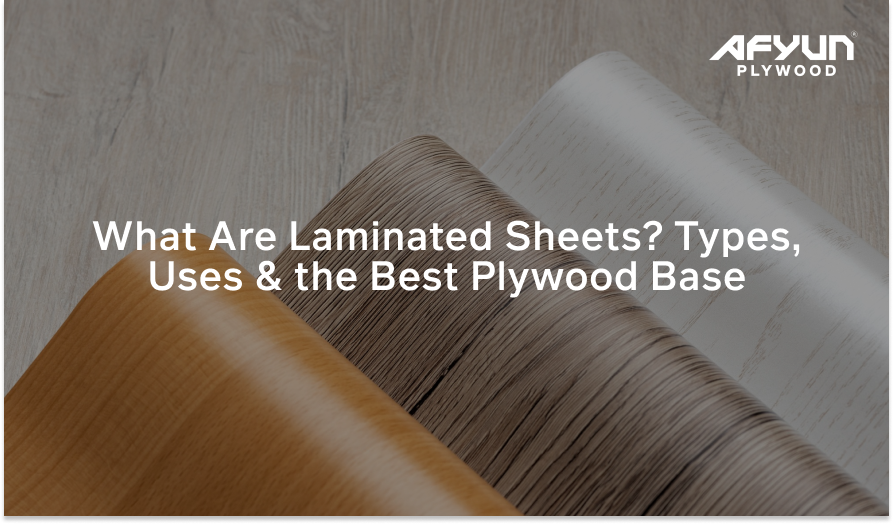
Walk into any modern kitchen, wardrobe showroom, or office interior, and you’ll notice smooth, stylish surfaces that look like wood, stone, or even fabric. More often than not, what you’re seeing isn’t solid material, it’s laminate. Laminated sheets have quietly become the backbone of contemporary furniture and interiors, offering durability, design flexibility, and cost efficiency in one neat layer.
Let’s break down what laminate sheets really are, how they’re made, the types available, where you can use them, and most importantly, what kind of plywood base works best underneath.
What Is a Laminate Sheet Made Of?
A laminate sheet is not a single material but a carefully engineered surface layer. It is typically made by pressing together multiple layers of kraft paper, decorative paper, and a protective overlay using heat and high pressure.
Here’s how it usually comes together:
- Kraft paper core: Provides strength and thickness
- Decorative paper layer: Printed with wood grains, textures, or patterns
- Protective overlay: A transparent layer that resists scratches, heat, and moisture
- Resin bonding: Phenolic or melamine resins bind everything into a single rigid sheet
The result is a durable, thin sheet that can mimic almost any surface while being far more practical for daily use.
Types of Laminate Sheets
Not all laminates are the same. Choosing the right type depends on where and how you plan to use them.
1. High-Pressure Laminates (HPL)
These are made under very high pressure and are known for their strength and durability. Ideal for kitchens, countertops, and heavy-use furniture.
2. Low-Pressure Laminates (LPL)
Also called melamine laminates, these are directly pressed onto boards. They’re more affordable but less durable than HPL.
3. Glossy Laminates
Perfect for modern interiors, these offer a shiny, reflective finish often used in wardrobes and modular kitchens.
4. Matte Laminates
Subtle and elegant, matte laminates are great for spaces where you want a soft, non-reflective look.
5. Textured Laminates
Designed to replicate natural surfaces like wood grain or stone, adding depth and realism.
6. Anti-bacterial & Fire-retardant Laminates
Specialised laminates for hospitals, kitchens, and commercial spaces where hygiene and safety matter.
Plywood Laminate Sheet Design: Why It Works So Well
When laminate sheets are paired with plywood, you get both beauty and strength. Plywood offers a solid core, while laminate provides the finish.
This combination allows:
- Seamless modern designs
- Long-lasting furniture surfaces
- Resistance to warping compared to solid wood
- A wide range of aesthetic choices without compromising structure
Whether it’s a sleek wardrobe or a textured TV unit, plywood laminate sheet design gives you freedom without sacrificing durability.
Wood Laminate Sheets for Furniture
Furniture is where laminates truly shine. From dining tables to study desks, laminate sheets are widely used because they:
- Resist scratches and stains
- Are easy to clean
- Maintain their appearance for years
- Come in countless finishes, wood, marble, abstract, metallic
Wood laminate sheets for furniture are especially popular because they offer the look of real wood without the cost or maintenance. You can achieve oak, walnut, teak, or ash finishes with consistency across every panel.
Wood Laminate Sheets for Cabinets
Cabinets, especially in kitchens and bathrooms, demand materials that can handle moisture, heat, and frequent use.
Wood laminate sheets for cabinets are ideal because they:
- Protect the underlying material from moisture
- Offer easy-to-maintain surfaces
- Keep their colour and finish intact over time
- Work well in both traditional and modern designs
For kitchens, pairing laminates with moisture-resistant plywood is essential to avoid long-term damage.
How to Use Laminate Sheets
Laminate sheets are not standalone structural materials, they are surface finishes. They need to be applied over a base like plywood, MDF, or particle board.
Here’s how they’re typically used:
- Covering furniture surfaces like tables, cabinets, wardrobes
- Wall panelling for decorative interiors
- Kitchen shutters and countertops
- Office workstations and partitions
The key is choosing the right base material depending on the application.
How to Attach Laminate Sheets to Plywood
This is where craftsmanship matters. Proper installation ensures both durability and finish quality.
Basic Process:
- Surface Preparation
The plywood surface must be smooth, clean, and dust-free. - Adhesive Application
A strong adhesive (usually contact cement) is applied evenly on both the laminate sheet and plywood. - Drying Time
Allow the adhesive to become tacky before bonding. - Placement
Carefully position the laminate sheet, once placed, it’s difficult to adjust. - Pressing
Use rollers or pressing tools to remove air bubbles and ensure proper bonding. - Edge Trimming
Excess laminate is trimmed for a clean finish.
A professional finish often comes down to precision during this stage.
Best Plywood Base for Laminates
Laminates don’t work in isolation, they rely completely on the plywood beneath. The right base ensures a smooth finish, strong bonding, and long-term durability. The wrong one can lead to bubbling, warping, or peeling.
Here are the ideal plywood options laminates can be attached to:
1. Marine Plywood
Best suited for areas exposed to water and high humidity such as kitchens, bathrooms, and utility spaces. It offers excellent resistance against moisture and prevents structural damage over time.
For such demanding conditions, Afyun’s Marine Plywood provides a dependable base that keeps laminates intact even in wet environments.
2. Moisture-Resistant Plywood
A practical choice for interiors that face occasional humidity but not direct water exposure, like wardrobes, bedroom furniture, and living room units.
Afyun’s Moisture Resistant Plywood works well with laminates in everyday spaces, offering durability without over-engineering the cost.
3. Fire Retardant Plywood
Used in spaces where safety is a priority, offices, commercial interiors, kitchens, or areas with higher fire risk. This plywood slows down the spread of flames, adding an extra layer of protection beneath decorative laminates.
Afyun’s Fire Retardant Plywood combines safety with structural strength, making it suitable for laminate applications in sensitive environments.
4. Flexi Ply
Designed for curved surfaces and creative furniture designs. If your laminate application involves bends, arcs, or unique shapes, this is the base you need.
Afyun’s Flexi Ply allows laminates to be applied smoothly over curved structures without cracking or surface stress.
Why This Choice Makes All the Difference
Each type of plywood serves a specific purpose. Choosing correctly ensures:
- Better adhesion of laminate sheets
- A smoother, more refined surface finish
- Resistance to environmental damage
- Longer-lasting furniture and interiors
A laminate may define the look, but the plywood defines how well that look holds up over time.
Why the Right Plywood Matters
Choosing poor-quality plywood can lead to:
- Laminate bubbling or peeling
- Warping of furniture
- Reduced lifespan
- Poor finish over time
A strong, stable plywood base ensures that your laminate not only looks good but stays that way for years.
Final Thoughts
Laminated sheets have transformed how furniture and interiors are designed. They offer versatility, durability, and aesthetic freedom, all at a practical cost. But the real secret lies beneath the surface. Pairing laminates with the right plywood base ensures that what looks good today continues to perform tomorrow.
Build Better with Afyun
When it comes to getting the foundation right, Afyun stands out with varieties of plywood solutions. The company offers products like moisture-resistant options to everyday durable boards which are designed to support every kind of laminate application.
Choose Afyun Plywood, one of the trusted plywood manufacturers, for ra wide range of plywood solutions tailored for modern interiors.
FAQs
What are laminate sheets?
Thin decorative sheets used over plywood to enhance appearance and durability.
What is laminate sheet made of?
Layers of kraft paper and decorative paper bonded with resin under heat and pressure.
What are the types of laminate sheets?
Common types include glossy, matte, textured, high-pressure laminates, and specialised laminates.
Can laminate sheets be used without plywood?
No, they need a base like plywood or MDF for support.
Which plywood is best for laminates?
It depends on use — Marine Plywood, Moisture Resistant Plywood, Fire Retardant Plywood, and Flexi Ply are commonly used.
Where can laminate sheets be used?
They are used on furniture, cabinets, wardrobes, wall panels, and office interiors.
Are laminate sheets waterproof?
They are water-resistant but not completely waterproof.
How do you attach laminate sheets to plywood?
Using adhesives like contact cement and pressing them evenly onto the surface.
Are laminate sheets good for kitchen cabinets?
Yes, they are durable, easy to clean, and suitable for kitchen use when paired with the right plywood.
Can laminates be used on curved surfaces?
Yes, when applied on flexible bases like Flexi Ply, they can work on curved designs.
Other Locations
Plywood Suppliers in Kerala | Plywood Suppliers in Bangalore | Plywood Suppliers in Chennai | Plywood Suppliers in Hyderabad | Plywood Manufacturers in Mangalore | Plywood Manufacturers in Coimbatore | Plywood Manufacturers in Tamilnadu | Plywood Manufacturers in Mysore | plywood manufacturers in india | Plywood Manufacturers in Kerala | Plywood Manufacturers in Bangalore | Plywood Manufacturers in Chennai | Plywood Manufacturers in Hyderabad