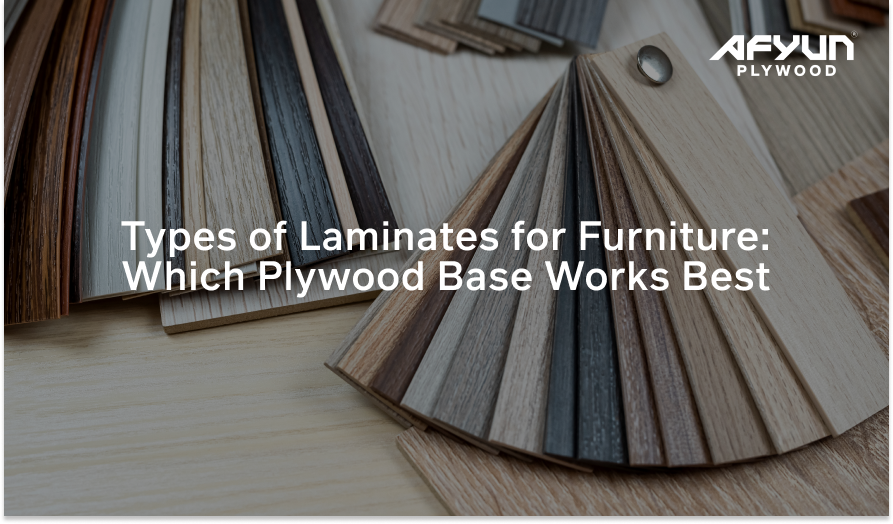
Laminates play a major role in modern furniture design. They define the look, finish, and surface durability of everything from wardrobes and cabinets to office desks and TV units. With so many textures, finishes, and price points available, laminates have become a practical and stylish solution for interiors.
But there is one factor that directly affects how well laminates perform over time. That is the plywood used as the base. Laminates are only as good as the surface they are applied to. If the plywood is weak, uneven, or unsuitable, even high-quality laminates can fail.
This guide breaks down the most common types of laminates and clearly explains which plywood base works best for each
What Are Laminates in Furniture?
Laminates are thin sheets made by pressing layers of paper and resin together under high pressure. These sheets are then applied to plywood or other boards to create a decorative and protective surface.
They are widely used because they are:
- Scratch-resistant
- Moisture-resistant
- Easy to clean
- Available in a wide range of designs
For more technical insight, you can refer to the Decorative Laminates Association, which explains laminate performance standards and classifications.
Types of Laminates for Furniture
1.High-Pressure Laminates (HPL)
HPL is one of the most durable laminate types. It is created under high pressure and temperature, making it strong and resistant to impact.
Best for:
- Wardrobes
- Kitchen cabinets
- Office furniture
Best plywood base:
Boiling Water Resistant or Boiling Water Proof plywood works best. These grades provide strength and moisture resistance, which complements the durability of HPL.
2. Low-Pressure Laminates (LPL)
LPL is thinner and more affordable than HPL. It is commonly used for low-cost furniture and interior panels.
Best for:
- Budget wardrobes
- Shelves
- Temporary furniture
Best plywood base:
Moisture Resistant plywood is suitable for dry areas. However, it is not ideal for long-term heavy use.
3. Matte Finish Laminates
Matte laminates offer a smooth, non-reflective surface. They are popular in minimalist and modern interiors.
Best for:
- Bedroom wardrobes
- Study tables
- Cabinets
Best plywood base:
Calibrated plywood ensures a uniform surface, which is essential for achieving a clean matte finish.
4. Glossy Laminates
Glossy laminates reflect light and make spaces look brighter and more spacious.
Best for:
- Modular kitchens
- Contemporary wardrobes
- TV units
Best plywood base:
BWR or BWP plywood is ideal because it prevents warping and supports the reflective surface without distortion.
5. Textured Laminates
Textured laminates mimic natural materials like wood, stone, or fabric. They add depth and character to furniture.
Best for:
- Feature walls
- Premium wardrobes
- Living room units
Best plywood base:
High-quality plywood with good core strength is essential to maintain the texture alignment and prevent surface irregularities.
6. Fire Retardant Laminates
These laminates are designed to resist fire and reduce flame spread. They are often used in commercial or high-risk environments.
Best for:
- Offices
- Hotels
- Homes with extensive electrical fittings
Best plywood base:
Fire retardant plywood is the best match. Using a fire-safe laminate on a regular plywood base reduces effectiveness. Pairing both ensures maximum protection.
Why the Plywood Base Matters
Laminates are only as good as the surface they are applied to. Even the most expensive laminate will fail if the plywood underneath is weak or unstable.
A good plywood base ensures:
- Better bonding of laminate sheets
- Resistance to bending and warping
- Longer lifespan of furniture
- Improved load-bearing capacity
For a deeper understanding of engineered wood standards, you can explore APA – The Engineered Wood Association.
Which Plywood Should You Choose?
Here is a quick guide:
- MR plywood for dry indoor furniture
- BWR plywood for moisture-prone areas
- BWP plywood for high durability and water exposure
- Fire-retardant plywood for safety-focused interiors
Choosing the right base depends on where the furniture will be used and how much load and exposure it will face.
Final Thoughts
Furniture design is not just about appearance. It is about choosing materials that work well together. Laminates define the look, but plywood defines the strength and longevity.
With the right combination, your furniture stays beautiful and durable for years. Explore high-quality plywood solutions from the best plywood manufacturer and build furniture that lasts.
FAQs
1. Which laminate is best for kitchen cabinets?
High-pressure laminates are best for kitchens because they resist heat, moisture, and daily wear.
2. Which plywood is best under kitchen laminates?
BWR or BWP plywood is recommended for kitchens due to its moisture resistance and durability.
3. Can laminates peel off over time?
Yes, laminates can peel if low-quality adhesive or poor plywood is used. A strong plywood base prevents this.
4. Is thicker plywood better for laminated furniture?
Yes, thicker plywood provides better strength and stability, especially for wardrobes and beds.
5. What is calibrated plywood and why is it used?
Calibrated plywood has uniform thickness, which ensures smooth laminate application and a better finish.
6. Are laminates waterproof?
Laminates are water-resistant but not fully waterproof. The plywood underneath must also be moisture resistant.
7. Which laminate is easiest to maintain?
Matte laminates are easier to maintain as they show fewer fingerprints and scratches compared to glossy finishes.
8. Can laminates be used on curved furniture?
Yes, flexible laminates can be used on curved surfaces, but the plywood base must be properly shaped.
9. What causes bubbles in laminates?
Bubbles occur due to poor adhesive, uneven plywood surfaces, or improper pasting techniques.
10. Is termite resistance important in plywood?
Yes, termite-resistant plywood helps protect furniture and increases its lifespan.
11. Which laminate is best for bedroom wardrobes?
Matte or textured laminates are commonly preferred for bedrooms due to their soft and elegant appearance.
12. Can glossy laminates scratch easily?
Yes, glossy laminates can show scratches more easily than matte finishes, especially in high-use areas.
13. Does laminate colour fade over time?
High-quality laminates resist fading, but prolonged exposure to sunlight can cause slight discolouration.
14. How do I choose between BWR and BWP plywood?
Choose BWR for moderate moisture exposure and BWP for areas with high water contact or heavy use.
15. Can fire-retardant plywood be used with all laminates?
Yes, it works with all laminate types and does not affect the finish or design.
16. Is laminate better than veneer?
Laminates are more durable and easier to maintain, while veneer offers a natural wood appearance but requires more care.
17. What is the lifespan of laminate furniture?
With proper materials and maintenance, laminate furniture can last 10 to 15 years or more.
18. Does plywood quality affect laminate finish?
Yes, uneven or low-quality plywood can lead to visible defects in the laminate surface.
19. Which laminate is best for office furniture?
High pressure laminates are ideal for offices due to their durability and resistance to wear.
20. Can I use the same plywood for all furniture?
It is not recommended. Different furniture types require different plywood grades based on usage and exposure.
Other Locations
Plywood Suppliers in Kerala | Plywood Suppliers in Bangalore | Plywood Suppliers in Chennai | Plywood Suppliers in Hyderabad | Plywood Manufacturers in Mangalore | Plywood Manufacturers in Coimbatore | Plywood Manufacturers in Tamilnadu | Plywood Manufacturers in Mysore | plywood manufacturers in india | Plywood Manufacturers in Kerala | Plywood Manufacturers in Bangalore | Plywood Manufacturers in Chennai | Plywood Manufacturers in Hyderabad