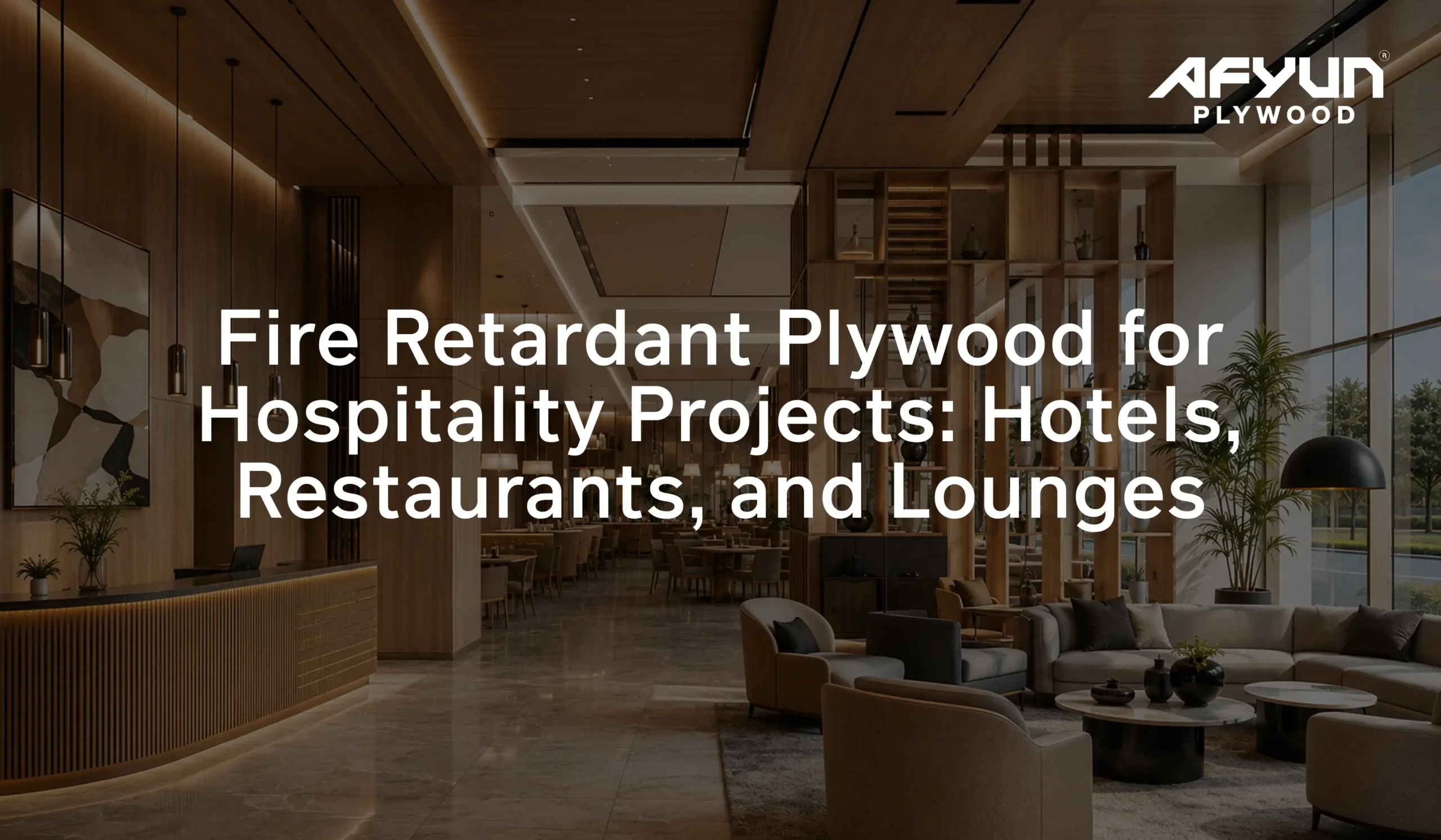
Fire retardant plywood is treated wood panelling designed to slow flame spread and reduce smoke generation, making it a core material for hotel corridors, restaurant kitchens, and lounge interiors. It is not fireproof, but it buys critical evacuation time during a fire event.
For hospitality projects across the UAE and Saudi Arabia, this material has moved from an optional upgrade to a near-mandatory specification.
Here’s what hospitality developers, contractors, and interior teams need to know before choosing fire retardant plywood for their next project.
What Is Fire Retardant Plywood and How Does It Work?
Fire retardant plywood is standard plywood infused with fire-resistant chemicals during manufacturing, usually through pressure treatment that pushes the chemicals deep into the core layers. These chemicals react to heat by releasing gases that slow combustion and limit how fast flames travel across the surface.
Unlike a simple surface coating, the treatment runs through the panel. This means the fire resistance holds even if the top veneer is scratched, cut, or sanded during installation.
Why Do Hospitality Projects Need Fire Retardant Plywood?
Hospitality spaces carry higher fire risk than most commercial buildings because they combine large occupant numbers, complex electrical loads, and open layouts. Hotels, restaurants, and lounges typically need it for these reasons:
- High footfall in corridors, lobbies, and dining areas increases evacuation complexity
- Kitchens and back-of-house areas carry constant fire risk from cooking equipment
- Guest rooms often include built-in wardrobes, panelling, and false ceilings that can fuel a fire if untreated
- Insurance providers and civil defence authorities increasingly require certified materials for licensing
A fire that spreads slowly gives staff and guests more time to reach exits safely. That single factor drives most of the material’s demand in this sector.
Where Is Fire Retardant Plywood Used Inside a Hotel?
Fire retardant plywood is used across nearly every interior zone in a hotel, not just high-risk areas. Common applications include:
- Guest room wardrobes, headboards, and fitted furniture
- Corridor wall panelling and ceiling systems
- Reception desks and lobby millwork
- Service ducts, AC shafts, and stairwells
- Back-of-house kitchen partitions and storage units
Restaurants and lounges follow a similar pattern, with heavier use around open kitchens, bar counters, and ceiling installations above dining areas.
Does Fire Retardant Plywood Meet Saudi and UAE Building Codes?
Fire retardant plywood used in hospitality projects across Saudi Arabia and the UAE generally needs to meet SASO and SABER certification requirements in the Kingdom, and Dubai Civil Defence approval standards in the Emirates. These certifications confirm the plywood has passed flame spread and smoke development testing under recognised protocols.
Civil Defence authorities in both countries treat hotels as high-occupancy buildings. That classification means fire safety compliance is checked before a hospitality project can receive its operating licence.
Contractors sourcing plywood for a hotel build should always confirm certification documents match the specific project location, since requirements can differ slightly between Saudi Arabia and the UAE.
Is Fire Retardant Plywood Waterproof or Moisture Resistant?
No, fire retardant plywood is not automatically waterproof. Fire treatment and moisture resistance are separate properties, and hospitality projects near coastal areas or with heavy water exposure need to specify both.
For kitchens, spa areas, and poolside lounges, it is worth requesting plywood that combines fire retardant treatment with marine-grade or BWP bonding. This avoids swelling or delamination in humid environments common across Gulf hospitality projects.
How Do You Choose the Right Fire Retardant Plywood Supplier?
Choosing a supplier comes down to certification, consistency, and the ability to match large-scale hotel procurement timelines. A few things worth checking before finalising a supplier:
- Valid SASO/SABER or Dubai Civil Defence certification for the specific plywood grade
- Consistent panel thickness across large order volumes
- Availability of both fire retardant and moisture-resistant combined boards
- Proven delivery capacity for multi-floor hotel or restaurant fit-outs
Working with one of the best plywood manufacturers in Kerala gives hospitality contractors access to consistent quality control, since much of the raw material sourcing and treatment process happens at origin before export.
What Sizes and Grades Are Commonly Used in Hospitality Projects?
Hospitality fit-outs typically use fire retardant plywood in 18mm and 25mm thicknesses for structural panelling, and 6mm to 12mm for decorative veneered surfaces. Grade selection depends on whether the panel is load-bearing or purely aesthetic.
| Application | Common Thickness | Typical Use |
| Guest room furniture | 18mm | Wardrobes, headboards, fitted units |
| Corridor and lobby panelling | 12mm to 18mm | Wall cladding, decorative panels |
| Kitchen partitions | 18mm to 25mm | Fire-rated separation walls |
| Ceiling systems | 6mm to 12mm | False ceilings, decorative overlays |
| Service ducts and shafts | 18mm | Fire containment barriers |
Why Are UAE and Saudi Hospitality Projects Importing Plywood from India?
India has become a major sourcing hub for fire retardant plywood because of its established manufacturing base, competitive pricing, and growing certification alignment with Gulf standards. Kerala in particular has a long-standing plywood manufacturing cluster that exports across the Middle East.
A reliable plywood exporter from India to Saudi Arabia typically offers pre-certified stock, which shortens the compliance timeline for hotel projects working against tight construction deadlines. This matters most for large hospitality developments where delays in material approval can hold up an entire fit-out phase.
How Much Does Fire Retardant Plywood Cost Compared to Standard Plywood?
Fire retardant plywood generally costs 20 to 40 percent more than standard plywood of the same thickness, depending on the certification level and treatment process used. The price difference reflects the additional chemical treatment and testing required to meet fire safety standards.
For most hospitality projects, this cost sits within the interior fit-out budget rather than being treated as a separate line item, since fire safety compliance is a licensing requirement rather than an optional upgrade.
Building Safer Hospitality Spaces with the Right Plywood
Fire safety in hotels, restaurants, and lounges starts with the materials used long before construction finishes. Certified fire retardant plywood protects guests, meets civil defence requirements, and gives hospitality operators one less compliance risk to manage after opening.
Afyun Playwoods supplies certified fire retardant plywood built for hospitality projects across the UAE and Saudi Arabia, with consistent grading and documentation ready for civil defence approval. Whether you’re fitting out a single restaurant or sourcing material for a multi-property hotel chain, get in touch with Afyun Playwoods to discuss certified stock availability and bulk order timelines for your next project.
FAQs
1. What is fire retardant plywood?
Fire retardant plywood is specially treated plywood designed to slow the spread of flames and reduce smoke generation during a fire. It helps improve evacuation time and enhances fire safety in commercial buildings.
2. Why is fire retardant plywood important for hotels and restaurants?
Hotels, restaurants and lounges accommodate large numbers of people, making fire safety a top priority. Fire retardant plywood helps meet building regulations while reducing the risk of rapid fire spread.
3. Is fire retardant plywood fireproof?
No. Fire retardant plywood is not fireproof. It is engineered to resist ignition and slow flame spread, providing valuable time for evacuation and emergency response.
4. Where is fire retardant plywood used in hospitality projects?
It is commonly used for guest room furniture, wall panelling, false ceilings, reception counters, kitchen partitions, service shafts, lounge interiors and decorative millwork.
5. Does fire retardant plywood comply with UAE and Saudi Arabia regulations?
Yes. Certified fire retardant plywood can comply with Dubai Civil Defence requirements in the UAE and SASO/SABER regulations in Saudi Arabia, depending on the product specifications and certifications.
6. Can fire retardant plywood also be moisture resistant?
Yes. Fire retardant plywood can be manufactured with moisture-resistant or marine-grade bonding, making it suitable for kitchens, spas, poolside areas and other humid environments.
7. Why do hospitality projects source plywood from Kerala?
Many of the best plywood manufacturers in Kerala are known for producing high-quality, certified plywood with consistent quality, making them preferred suppliers for hospitality projects across the Middle East.
8. Why choose Afyun Plywood for hospitality projects?
Afyun Plywood supplies certified fire retardant plywood suitable for hotels, restaurants and lounges. With reliable quality, export-ready documentation and bulk supply capabilities, Afyun supports hospitality projects across the UAE and Saudi Arabia.