The UAE skyline is built on height, and with height comes a fire risk that ordinary buildings never face. Fires in towers climb fast, evacuation takes time, and firefighters can only reach so far from the ground. Over the past decade, several high profile blazes pushed regulators, developers and insurers to rethink how towers are built and fitted out. This guide explains the main challenges, what the codes now require, and how material choices, including interior panels, shape the outcome.
Why Are High-Rise Buildings Harder to Protect From Fire?
High-rise fires are harder to control because flames and smoke travel vertically through facades, shafts and cavities faster than occupants can descend. Evacuating hundreds of residents takes far longer than leaving a low building, and fire crews face limits on reach and access above the lower floors. That is why prevention, compartmentation and the fire behaviour of every material matter more in towers than anywhere else.
What Are the Biggest Fire Safety Challenges in UAE High-Rise Buildings?
- Combustible cladding: Older towers used aluminium composite panels with plastic cores, which let fire race up the exterior.
- Vertical spread: Fire can jump between floors through windows, balconies and gaps in the facade.
- Evacuation time: Large occupant numbers and long stair descents slow escape.
- Smoke movement: Smoke through stairwells and shafts endangers occupants far from the fire.
- Ageing buildings: Many towers were built before stricter rules arrived, and retrofitting is costly.
- System maintenance: Sprinklers, alarms and pressurisation only help when tested and maintained.
- Interior fit outs: Joinery, partitions, ceilings and panelling add fuel if untreated.
Which UAE Tower Fires Changed the Rules?
A few well known fires pushed the debate on cladding and compliance.
| Year | Building | Location | Why It Mattered |
| 2012 | Tamweel Tower | Jumeirah Lake Towers, Dubai | 34 storey tower, cladding thought ignited by a discarded cigarette |
| 2015 | The Address Downtown | Dubai | New Year’s Eve fire that renewed focus on facade cladding |
| 2016 | Sulafa Tower | Dubai Marina | 78 storey residential tower with extensive exterior fire damage |
Estimates from the Middle East Centre for Sustainable Development once suggested that up to 70 percent of Dubai’s high-rises used cladding of this type, though figures vary and date from earlier years.
How Do UAE Fire Codes Address High-Rise Safety?
The UAE Fire and Life Safety Code of Practice is the main framework. An annexure that came into force on 1 September 2012 made fire rated cladding compulsory for new construction approved by Dubai Civil Defence, and later revisions tightened rules on cladding flammability and installation. For older buildings, owners are advised to have the facade evaluated through Civil Defence approved experts. The shift pushed insurers as well, with some reinsurers asking GCC insurers to retain a larger share of high-rise risk.
What Role Do Interior Materials Play in High-Rise Fire Safety?
Interior materials decide how quickly a fire spreads inside a floor and how much smoke it produces. Facade rules get the headlines, but interiors are where most occupants are exposed.
| Interior Element | Fire Concern | What to Check |
| Wall panelling and partitions | Surface flame spread | Fire retardant rating and test reports |
| Doors and joinery | Fuel load, smoke | Treated or rated boards |
| Ceilings and false ceilings | Concealed spread | Non combustible or treated materials |
| Furniture and fit out | Quick ignition | Certified boards and finishes |
How Does Fire Retardant Plywood Help?
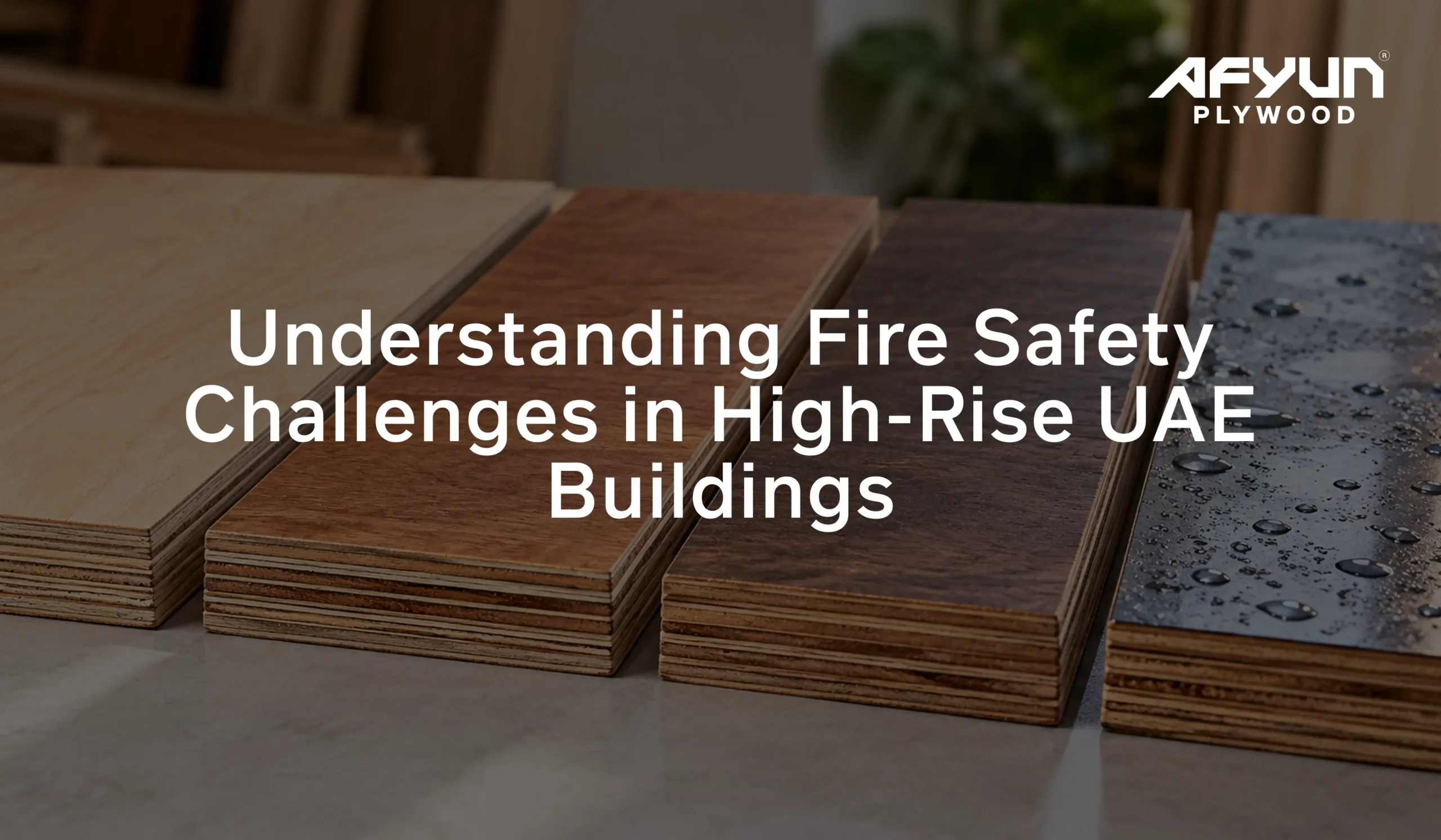
Fire retardant plywood is plywood treated so that it resists ignition and slows flame spread, giving occupants more time to evacuate. Fireman fire retardant plywood from Afyun is IS 5509 certified and made from hardwood veneers treated with fire resistant chemicals during manufacturing. It suits partitions, wall panelling, doors, ceilings and joinery in towers, hotels, hospitals and commercial buildings. Afyun also exports fire retardant plywood to the Middle East, including Dubai, Sharjah and Abu Dhabi.
Treated plywood is fire retardant, not fireproof, and it does not replace a compliant facade, sprinklers or alarms. It works as one layer in a wider fire strategy.
What Should Developers and Facility Managers Check Before Specifying Materials?
- Confirm the product’s test reports and that the authority having jurisdiction accepts them
- Look for recognised certification such as IS 5509 for fire retardant plywood
- Check that treatment is applied through the board, not just sprayed on the surface
- Ask about moisture performance, since humid conditions can affect some treatments
- For kitchens, bathrooms and wet areas, consider a board that is both marine grade and fire rated, such as Afyun Club Fire
- Request batch documentation for bulk orders
- Plan inspection and maintenance of all fire systems
Where Can You Source Certified Fire Retardant Plywood?
For large projects, supply consistency matters as much as certification. Among plywood manufacturers in India, look for those with verified standards, export experience, custom size options and the capacity to deliver bulk orders on schedule. Afyun began its journey in 2001 and lists safe, sustainable and third party certified products among its priorities. Always confirm that documentation meets the requirements of the Civil Defence authority for your emirate.
Bottom Line
Fire safety in UAE towers is a layered problem. Facades, evacuation routes, active systems and interior materials all play a part, and weak links in any layer can undo the rest. Modern codes have raised the bar on cladding, and attention is now moving to what sits inside the building. Choosing certified, tested materials is one of the simplest ways to cut risk without changing the design.
If you want to see how treated plywood fits into a high-rise interior, the Afyun fire retardant plywood range lists the certifications, grades and sizes available.
FAQs
1. What are the biggest fire safety challenges in high-rise UAE buildings?
Combustible cladding, fast vertical spread, long evacuation times, smoke movement, ageing buildings and poorly maintained fire systems are the main concerns.
2. Which UAE code governs high-rise fire safety?
The UAE Fire and Life Safety Code of Practice sets the framework, with Civil Defence authorities enforcing it in each emirate.
3. Why did cladding become such a concern in the UAE?
Aluminium composite panels with plastic cores were widely used, and several tower fires, including The Address Downtown in 2015 and Sulafa Tower in 2016, put the issue in focus.
4. What is fireman fire retardant plywood?
It is plywood from Afyun treated with fire resistant chemicals during manufacturing, certified to IS 5509, so it resists ignition and slows flame spread.
5. Is fire retardant plywood the same as fireproof plywood?
No. Fire retardant plywood slows ignition and flame spread but can still burn under prolonged fire exposure.
6. Where is fire retardant plywood used in high-rise buildings?
It suits partitions, wall panelling, doors, ceilings and joinery in towers, hotels, hospitals and commercial buildings.
7. How can I verify that plywood is genuinely fire retardant?
Look for the IS 5509 mark and ask for test reports and batch documentation.
8. Should wet areas use a different board?
Yes. Moisture can affect some fire retardant treatments, so a board that is both marine grade (IS 710) and fire rated, such as Club Fire, is safer for kitchens and bathrooms.
9. What should I check when choosing plywood manufacturers in India for UAE projects?
Check certification, export experience, bulk supply capacity, custom sizes and whether the documentation meets the local authority’s requirements.
10. Does fire retardant plywood replace sprinklers and alarms?
No. It supports safer interiors but works alongside compliant facades, active fire systems and good evacuation planning.