Fire retardant treated plywood is one of those building materials that quietly does its job for years, right up until the moment someone assumes it will last forever without a second thought. It will not. Like any protective treatment applied to a natural material, fire retardant chemistry has a working life, and understanding that lifespan is the difference between a building genuinely protected and one that only looks protected on paper.
What Is Fire Retardant Treatment and How Does It Work?
Fire retardant treatment is a chemical process applied to plywood that slows the spread of flame and reduces smoke generation by altering how the wood reacts when exposed to heat.
Rather than making plywood entirely fireproof, the treatment works by interfering with combustion at a chemical level, either by releasing water vapor to cool the surface, forming a protective char layer, or diluting flammable gases released during heating.
The core mechanisms behind fire retardant treatment include:
- Slowing ignition time when exposed to direct flame
- Reducing the rate at which fire spreads across the surface
- Lowering smoke density during combustion
- Limiting the release of flammable volatile compounds
How Long Does Fire Retardant Treatment Last?
Properly applied fire retardant treatment on plywood typically lasts between 10 and 20 years under normal indoor conditions, though this range depends heavily on the treatment method, environmental exposure, and how the plywood is maintained.
Interior-grade fire retardant treatments generally hold their protective properties longer than exterior applications, since they are shielded from moisture, UV exposure, and temperature fluctuation that gradually degrade chemical treatments over time.
Factors That Influence Treatment Lifespan
Not all fire retardant plywood ages at the same rate. Several variables determine how long the treatment remains fully effective.
- Environmental humidity: high moisture environments can leach fire retardant chemicals out of the wood over time
- UV exposure: direct sunlight accelerates the breakdown of certain treatment compounds
- Treatment method: pressure-impregnated treatments generally outlast surface-applied coatings
- Application quality: treatments applied to manufacturer specifications last significantly longer than inconsistent or diluted applications
- Physical wear: repeated abrasion or damage to the surface can compromise the treated layer
Interior vs Exterior Applications
Fire retardant plywood used indoors, in ceilings, wall panelling, or structural elements away from weather exposure, tends to retain effectiveness closer to the upper end of the 10 to 20 year range. Plywood exposed to outdoor conditions or high-humidity environments should be assessed more frequently, since moisture is one of the primary factors that shortens treatment life.
How Can You Tell If Fire Retardant Treatment Has Degraded?
Fire retardant treatment degradation is often difficult to detect visually, which is why manufacturer documentation, environmental history, and periodic testing matter more than a simple surface inspection.
Signs that treatment effectiveness may be compromised include:
- Visible efflorescence, a white, chalky residue that can indicate chemical leaching
- Persistent dampness or water exposure in the plywood’s installation environment
- Physical damage, warping, or delamination of the panel surface
- Plywood that has exceeded its manufacturer-stated treatment lifespan without reassessment
Because degradation is not always visible, buildings that rely on fire retardant plywood for code compliance should track installation dates and treatment certifications rather than assuming performance based on appearance alone.
What Maintenance Practices Extend Fire Retardant Plywood’s Lifespan?
Regular moisture control, protection from direct sunlight, and periodic inspection are the most effective ways to extend the working life of fire retardant treated plywood.
Practical maintenance steps include:
- Control humidity in the installation environment, since consistent moisture exposure is the leading cause of premature chemical leaching
- Avoid direct water contact where possible, particularly for treatments not rated for exterior or high-moisture use
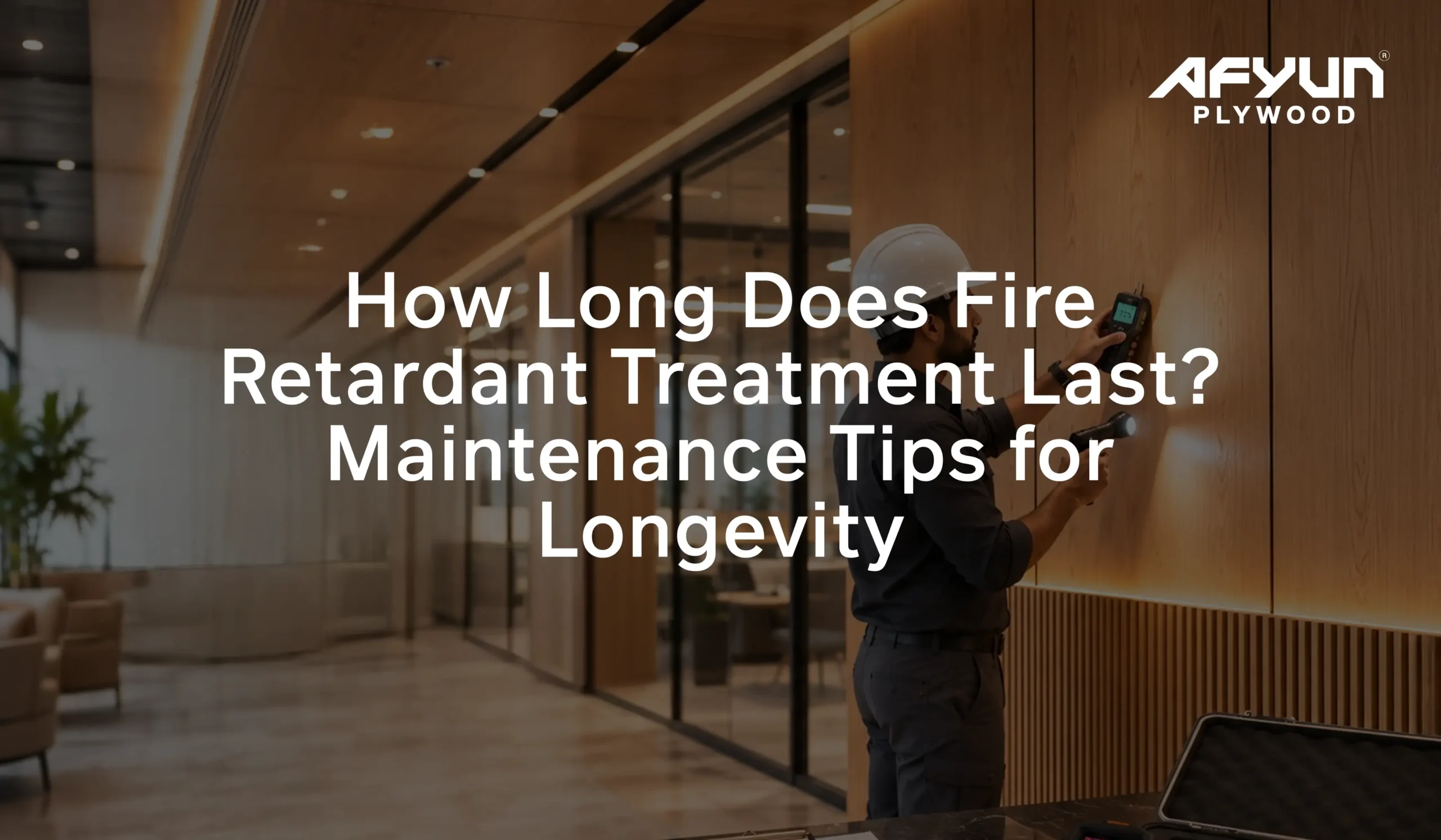
- Inspect periodically for efflorescence, warping, or surface damage, especially in commercial or industrial settings
- Maintain proper ventilation around installed panels to prevent condensation buildup
- Keep documentation of treatment certification and installation date for future reference and compliance checks
Why Ventilation Matters More Than Most People Realize
Poor ventilation around fire retardant plywood creates the exact conditions that accelerate chemical breakdown, trapped moisture, temperature fluctuation, and condensation. Buildings with enclosed, poorly ventilated cavities around treated panels often see shorter effective treatment life than those with proper airflow, even when the plywood itself is identical.
Should Fire Retardant Plywood Be Re-Treated Over Time?
Yes, in most cases fire retardant plywood should be reassessed and potentially re-treated once it approaches or exceeds its manufacturer-stated effective lifespan, particularly in commercial buildings where fire code compliance is mandatory.
Situations that typically call for reassessment or re-treatment:
- The plywood has exceeded the manufacturer’s stated treatment lifespan
- Visible signs of chemical leaching or surface degradation are present
- The building has undergone a change in use that increases fire safety requirements
- Insurance or regulatory audits require updated fire safety documentation
For pressure-treated products such as fireman fire retardant plywood, which are engineered for deeper chemical penetration rather than surface-level protection, the effective lifespan tends to hold up more reliably over time, but periodic inspection remains essential rather than optional, especially in buildings where fire safety compliance is legally mandated.
Comparing Fire Retardant Treatment Methods
| Treatment Type | Typical Lifespan | Best Suited For |
| Surface-applied coating | 5–10 years | Light retrofit or budget projects |
| Pressure-impregnated treatment | 10–20 years | New construction, structural panelling |
| Intumescent coating | 10–15 years | Interior fire-rated partitions |
| Exterior-rated treatment | 8–12 years | Weather-exposed applications |
Pressure-impregnated treatments consistently outperform surface coatings because the fire retardant chemicals penetrate deeper into the wood fibers, rather than sitting only on the surface where they are more vulnerable to wear and environmental exposure.
Why Sourcing Quality Matters as Much as Treatment Type
The lifespan figures above assume a well-manufactured product to begin with. Inconsistent chemical impregnation, poor-quality base plywood, or non-standardized application processes can significantly shorten effective treatment life, regardless of what the specification sheet claims. This is why buyers, particularly architects, contractors, and large-scale developers, are increasingly selective about working directly with established plywood manufacturers in India, where rigorous quality control and standardized treatment processes help ensure the fire retardant properties actually perform as documented over the panel’s stated lifespan.
Protecting Your Investment for the Long Term
Fire retardant treatment is not a one-time guarantee stamped onto a panel and forgotten. It is a chemical protection system with a defined working life, one that depends on installation conditions, environmental exposure, and ongoing maintenance to perform as intended. Treating it with the same seriousness as any other building safety system, tracked, inspected, and reassessed over time, is what keeps that protection genuinely reliable rather than merely assumed.
Source Reliable Fire Retardant Plywood From Afyun Plywoods
Afyun Plywoods manufactures fire retardant plywood engineered for consistent chemical penetration and long-term performance, backed by quality control processes built for demanding commercial and export markets. Whether you are sourcing for a new construction project or replacing ageing panelling, the Afyun team can help you choose the right treatment grade for your building’s requirements.
Get in touch with Afyun Plywoods today to discuss your fire retardant plywood requirements and receive detailed technical specifications.
FAQs
1. How long does fire retardant treatment last on plywood?
Fire retardant treatment typically lasts 10 to 20 years, depending on conditions and maintenance.
2. Is fire retardant plywood completely fireproof?
No. It slows flame spread, reduces smoke and delays ignition but does not make plywood fireproof.
3. What affects the lifespan of fire retardant treatment?
Moisture, UV exposure, physical damage, treatment quality and installation conditions affect its lifespan.
4. How can you know if fire retardant treatment has degraded?
Check for moisture damage, chemical leaching, surface damage and review manufacturer certification records.
5. Can fire retardant plywood be used outdoors?
Only specific exterior-rated fire retardant plywood should be used for outdoor applications.
6. Does water damage affect fire retardant properties?
Yes. Excess moisture can reduce the effectiveness of fire retardant chemicals over time.
7. Which lasts longer: pressure-treated or coated fire retardant plywood?
Pressure-treated plywood generally lasts longer because chemicals penetrate deeper into the wood.
8. How often should fire retardant plywood be inspected?
Regular inspections are recommended, especially for commercial and high-risk applications.
9. Can fire retardant plywood be re-treated?
Yes, it can be reassessed and re-treated if required after reaching its recommended lifespan.
10. Why choose a trusted fire retardant plywood manufacturer?
A reliable manufacturer ensures quality treatment, safety standards and consistent performance.