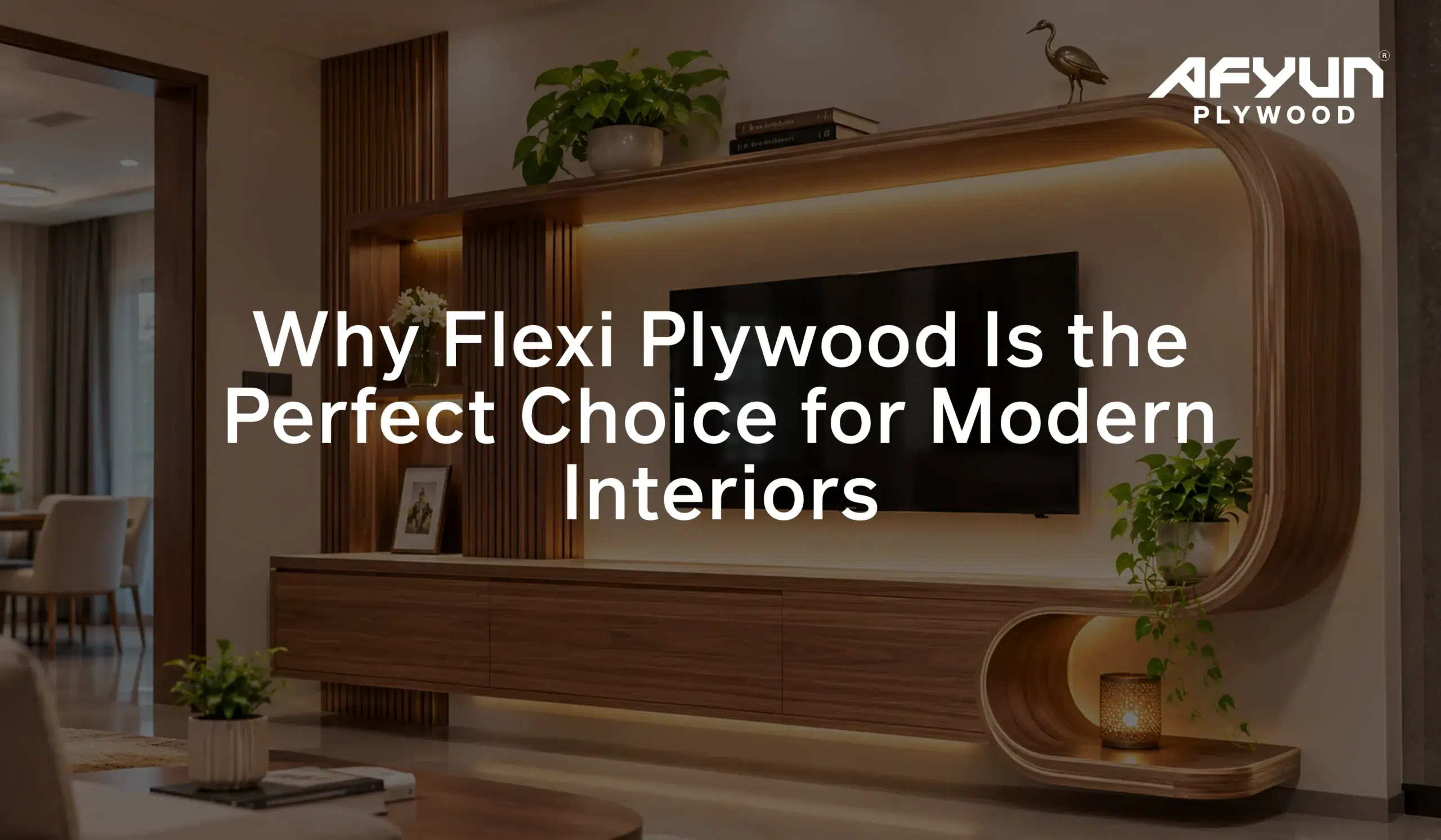
Modern interior design is moving beyond conventional straight lines and rectangular furniture. Curved kitchen islands, rounded wardrobes, circular wall panels and customised furniture are becoming popular in residential and commercial spaces. These design elements introduce softer shapes, improve visual flow and give interiors a distinctive appearance.
However, creating curved structures using conventional wood-based panels can be challenging. Standard plywood is primarily designed for flat applications and may crack or split when bent beyond its flexibility limits. Flexi plywood offers a practical alternative, allowing designers and furniture manufacturers to create curved surfaces with greater ease.
Flexi plywood is a specialised engineered wood product designed to bend around curved surfaces. Also known as flexible or bendable plywood, it is particularly useful for contemporary interiors that require customised shapes and finishes.
What Is Flexi Plywood and How Does It Work?
Flexi plywood is manufactured to bend around curved surfaces without breaking under suitable bending conditions. Unlike conventional plywood, which has a relatively rigid structure, flexible plywood is designed to accommodate curves along a particular direction.
Its construction generally involves thin veneer layers arranged to provide greater flexibility. Depending on the product, it may be available in different thicknesses and specifications to suit various applications.
The material can be shaped around suitable supporting frameworks and subsequently finished with decorative veneers, laminates or paint.
Key characteristics include:
- Bending capability: Designed to accommodate curved surfaces.
- Customisation: Suitable for customised furniture and architectural features.
- Finishing flexibility: Can be finished with suitable laminates, veneers and paint.
- Specialised construction: Manufactured for applications requiring greater flexibility than conventional plywood.
One important consideration is that flexi plywood is not intended to replace conventional plywood in every application. Its primary purpose is to make curved designs easier to execute.
Why Are Curved Designs Becoming Popular in Modern Interiors?
Curved elements can change the way an interior looks and feels. Instead of relying entirely on sharp edges and straight lines, designers use rounded surfaces to create a softer visual appearance.
Some popular applications include:
- Curved television units in living rooms.
- Rounded headboards and customised wardrobes in bedrooms.
- Curved kitchen islands and cabinet edges.
- Decorative wall panels and architectural columns.
- Rounded reception counters in commercial spaces.
Hotels, restaurants, offices and retail outlets also incorporate curved structures to create distinctive interiors.
However, achieving these shapes requires suitable materials and construction techniques. Using conventional plywood may involve additional cutting, joining and shaping. Flexi plywood simplifies certain aspects of the process by providing a sheet specifically designed for bending applications.
What Are the Key Benefits of Flexi Plywood?
1. Greater Design Flexibility
The biggest advantage of flexi plywood is its ability to accommodate curved surfaces. Designers can experiment with rounded furniture, cylindrical structures and decorative wall features that may be difficult to create using conventional rigid boards.
2. Suitable for Customised Furniture
Furniture manufacturers can use flexible plywood to create:
- Curved cabinet fronts.
- Rounded reception desks.
- Decorative shelving.
- Customised furniture components.
- Rounded wardrobe sections.
It is particularly useful when a design requires furniture to follow an unconventional shape.
3. Smooth Curved Surfaces
When properly selected, shaped and installed, flexi plywood can provide a continuous curved surface. This helps achieve a neat finish without depending on multiple small wooden sections.
4. Multiple Finishing Options
Flexible plywood can accommodate suitable decorative veneers, laminates and paint finishes. This gives designers the freedom to coordinate curved structures with the remaining interior elements.
5. Applications Across Different Spaces
Its usefulness extends beyond residential interiors. Offices, hotels, retail establishments and restaurants can incorporate flexi plywood into customised counters, display units and architectural features.
Where Can Flexi Plywood Be Used in Modern Interiors?
Flexi plywood has several applications in residential and commercial projects.
| Application | How flexi plywood is used |
| Curved wall panels | Creating rounded decorative wall sections |
| Furniture | Manufacturing curved shelves and cabinet fronts |
| Reception counters | Forming rounded counter structures |
| Decorative columns | Covering suitable curved frameworks |
| Ceiling designs | Creating curved ceiling details and soffits |
| Wardrobes | Developing rounded wardrobe components |
| Retail displays | Creating customised curved display units |
Curved Wall Panels
Decorative wall panels can introduce depth and character into living rooms, bedrooms and commercial spaces. Flexible plywood can help create rounded sections and flowing architectural features.
Customised Furniture
Curved shelves, rounded cabinet fronts and specially designed furniture components are possible applications. It can also be used for selected wardrobe components where the design requires curved surfaces.
Reception Counters
Hotels, offices and retail establishments often incorporate curved reception desks to create distinctive entrances. Flexi plywood can help form the curved surfaces of these structures.
Decorative Columns and Ceilings
Interior columns and architectural features can be covered with flexible plywood to create rounded finishes. Curved ceiling details and decorative soffits can also introduce visual movement into otherwise flat spaces.
Does Flexi Plywood Offer Fire Resistance?
Material selection for modern interiors should consider more than appearance and flexibility. Safety requirements also play an important role, particularly in commercial buildings, hotels, offices and multi-storey residential developments.
Wood-based panels are available in different grades and specifications, and their fire performance can vary. Standard plywood and flexible plywood should not automatically be assumed to offer enhanced fire resistance.
For projects where fire performance is an important requirement, fireman fire retardant plywood is a specialised material option worth considering. Fire-retardant plywood is manufactured and tested to meet specified fire-performance standards. Its purpose is to reduce the spread of flames under defined testing conditions, rather than make the material completely fireproof.
Before selecting fire-retardant plywood, consider:
- Relevant fire-performance standards.
- Manufacturer’s test reports.
- Product certifications.
- Intended application and installation requirements.
- Compliance with applicable building regulations.
It is important to understand that flexible plywood and fire-retardant plywood serve different purposes. Flexi plywood is designed for bending applications, while fire-retardant plywood addresses specific fire-performance requirements.
Where a project requires both characteristics, the availability and suitability of a product meeting both requirements should be verified with the manufacturer.
Flexi Plywood vs Regular Plywood: What Is the Difference?
The main difference between flexi plywood and regular plywood lies in their construction and intended applications.
| Feature | Flexi plywood | Regular plywood |
| Primary purpose | Curved applications | Flat and rigid applications |
| Flexibility | Designed to bend | Relatively rigid |
| Construction | Specialised flexible veneer arrangement | Cross-layered veneer construction |
| Common uses | Curved furniture and wall panels | Cabinets, shelves and partitions |
| Design applications | Rounded and cylindrical structures | Straight and conventional structures |
| Structural suitability | Depends on product and application | Depends on grade and specification |
The two materials can also complement each other within the same project. For instance, regular plywood may be used to construct the main framework of a cabinet, while flexi plywood forms its rounded exterior.
Choosing between them depends on the design. Regular plywood is generally more appropriate for conventional flat furniture and structural components, while flexi plywood is useful for rounded furniture and decorative installations.
What Should You Consider Before Buying Flexi Plywood?
Selecting the right product requires attention to several specifications.
1. Curve radius: Different flexi plywood products have different bending capabilities. A sheet suitable for a gentle curve may not accommodate a tighter design.
2. Thickness: The appropriate thickness depends on the intended application, bending direction and supporting structure.
3. Manufacturing quality: Check veneer consistency, bonding quality and surface condition.
4. Supporting framework: Ensure that the supporting structure is appropriate for maintaining the intended shape.
5. Finishing compatibility: Laminates, veneers and paints should be suitable for curved surfaces.
6. Installation requirements: Follow the manufacturer’s recommendations to avoid cracks and surface damage.
Professional installation is particularly useful for complex furniture and architectural features.
Is Flexi Plywood Worth Considering for Modern Interiors?
Flexi plywood is a useful material for interior projects that move beyond conventional flat surfaces. Its bending capability gives architects, furniture manufacturers and interior designers more freedom to develop customised shapes.
From curved reception counters to rounded wall panels and decorative furniture, it can simplify the execution of designs that would otherwise require more complicated construction methods.
However, it should be selected for the right purpose. It is not a universal substitute for conventional plywood, particularly in applications that require substantial structural strength.
Working with experienced plywood suppliers in India can help buyers compare product specifications, identify suitable grades and source materials that match their project requirements.
Explore Plywood Solutions with Afyun Plywoods
The right material makes a difference to the quality and functionality of an interior project. Afyun Plywoods offers plywood solutions for different construction and interior requirements, including specialised applications where product specifications and performance standards are important.
Whether you are planning customised interiors, sourcing materials for furniture manufacturing or evaluating fire-retardant plywood for a project, connect with Afyun Plywoods to discuss your requirements and explore suitable plywood solutions.
Frequently Asked Questions
1. What is flexi plywood used for?
Flexi plywood is used for curved interior applications such as rounded furniture, decorative wall panels, reception counters, columns and customised cabinetry.
2. How is flexi plywood different from regular plywood?
Regular plywood is designed primarily for rigid applications, while flexi plywood is manufactured to bend along a designated direction and accommodate curved surfaces.
3. Can flexi plywood be used for furniture?
Yes. It is suitable for customised furniture components, including curved cabinet fronts, rounded shelves, reception desks and decorative furniture elements.
4. Can flexi plywood be used for wardrobes?
Yes. It can be used for curved wardrobe components and customised cabinet designs. The supporting structure and product specifications should be appropriate for the application.
5. Is flexi plywood suitable for commercial interiors?
Yes. It can be used in hotels, offices, restaurants and retail establishments for curved counters, display units, decorative columns and wall panels.
6. Can flexi plywood be laminated?
Yes. Suitable decorative laminates, veneers and paints can be applied, provided the finishing material can accommodate the intended curve.
7. Does flexi plywood have the same strength as regular plywood?
Not necessarily. Flexi plywood is designed primarily for bending applications and should not automatically be considered a substitute for conventional structural-grade plywood.
8. Is flexi plywood fire-retardant?
Not all flexi plywood offers fire-retardant properties. Projects requiring enhanced fire performance should use appropriately tested and certified materials.
9. How do I choose the right flexi plywood thickness?
Consider the required curve radius, bending direction, supporting framework and manufacturer’s specifications before selecting the thickness.
10. Where can I source plywood for interior projects?
Afyun Plywoods can help buyers explore plywood solutions for different construction and interior applications. Contact the team to discuss product requirements and specifications.
Plywood Suppliers in Kerala | Plywood Suppliers in Bangalore | Plywood Suppliers in Chennai | Plywood Suppliers in Hyderabad |Plywood Manufacturers in Mangalore | Plywood Manufacturers in Coimbatore | Plywood Manufacturers in Tamilnadu | Plywood Manufacturers in Mysore | plywood manufacturers in india | Plywood Manufacturers in Kerala | Plywood Manufacturers in Bangalore | Plywood Manufacturers in Chennai | Plywood Manufacturers in Hyderabad