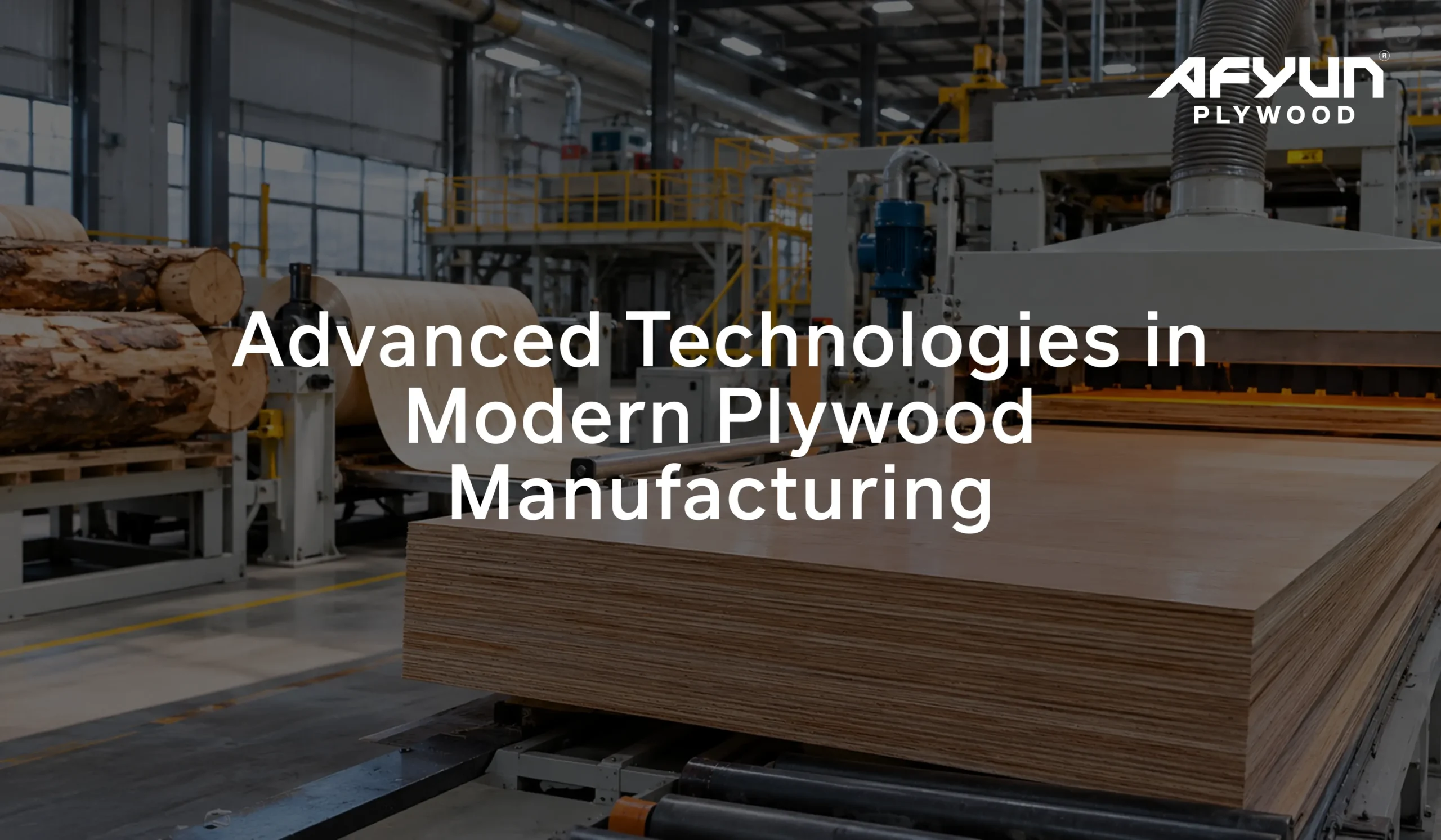
Plywood manufacturing has evolved significantly from traditional methods of joining thin wood veneers with adhesive. Modern production combines material science, precision machinery, specialised bonding systems and quality-control processes to create boards suited to different applications. From furniture and interior panelling to commercial buildings and specialised construction projects, plywood products are now expected to deliver consistent strength, dimensional stability and application-specific performance.
Technology plays an important role at every stage of production. Improvements in veneer preparation, adhesive formulation, pressing systems and surface finishing allow manufacturers to exercise greater control over the quality of the finished board. Specialised treatments also help produce plywood with properties such as moisture resistance, protection against biological damage and improved fire-retardant performance.
How Has Technology Changed Plywood Manufacturing?
Modern plywood production is a sequence of carefully controlled operations. Each stage influences the strength, appearance and durability of the finished sheet.
The key development is greater control over material preparation, bonding and treatment. Instead of relying only on conventional equipment and manual inspection, manufacturers can use automated machinery and testing systems to improve consistency across production batches.
Some important technological developments include:
- Computer-controlled veneer cutting and grading.
- Precision moisture measurement and veneer drying.
- Improved adhesive formulation and application.
- Hydraulic and automated hot-pressing systems.
- Chemical impregnation and specialised surface treatments.
- Digital inspection and quality-control equipment.
These processes help manufacturers produce plywood for specific performance requirements rather than treating every board as a general-purpose product.
Precision Veneer Preparation and Drying
Veneer preparation is one of the most important stages in plywood manufacturing. Logs are conditioned and processed before thin sheets of wood are peeled or sliced from them. The resulting veneers are then sorted according to thickness, quality, appearance and intended application.
Modern cutting equipment helps maintain more consistent veneer dimensions. Uniform thickness is important because variations can affect the finished panel’s surface, bonding and structural performance.
Drying technology is equally significant. Veneers must reach an appropriate moisture level before adhesive application. Excess moisture can interfere with bonding, while uneven drying may lead to defects during pressing or later use.
Industrial veneer dryers use controlled heat and airflow to reduce moisture content. Monitoring systems help operators maintain more consistent drying conditions and identify variations before the veneers move to the next stage.
Advanced Adhesive Systems and Bonding Technology
The adhesive used in plywood production determines how effectively individual veneer layers hold together. Different resin systems are selected according to the product’s intended application, moisture exposure and required performance.
Common adhesive systems include urea-formaldehyde, phenol-formaldehyde and melamine-fortified formulations. Their suitability depends on the plywood grade and the applicable product specification.
Modern adhesive application systems aim to distribute glue evenly across veneer surfaces. Consistent application helps reduce dry spots, excessive glue accumulation and variations in bonding.
Manufacturers may also use improved resin formulations to address specific requirements, including water resistance and controlled formaldehyde emissions. However, the performance of the finished board depends on the complete manufacturing process, not simply the adhesive selected.
What Role Does Hot-Pressing Technology Play?
Hot pressing is the stage where adhesive-coated veneers are bonded under controlled pressure and temperature. The veneers are arranged in layers, generally with the grain direction of adjacent layers positioned at right angles. This cross-laminated construction helps improve dimensional stability and distribute strength across the panel.
Modern hydraulic presses provide controlled pressure and temperature across the board. Automated systems can help maintain consistent pressing cycles, while calibrated equipment supports more uniform thickness.
The main advantages of improved pressing technology include:
- More consistent adhesive curing.
- Better control over panel thickness.
- Reduced variations between production batches.
- Improved bonding when the process is correctly calibrated.
- Greater production efficiency.
The number of pressing stages and the exact operating conditions vary according to the manufacturing system and product specification.
Fire-Retardant Treatments and Specialised Plywood
Fire performance is an important consideration in buildings, particularly in commercial interiors, institutional spaces and projects where material specifications include fire-safety requirements. Conventional plywood should not automatically be assumed to have fire-retardant properties. Specialised treatment and testing are necessary for products intended for these applications.
Modern fire-retardant manufacturing may involve treating veneers or finished plywood with suitable chemical formulations. Depending on the process, treatment can be carried out through soaking or pressure impregnation. The treatment method, chemical composition and conditioning process influence the performance of the finished board.
For projects requiring additional fire-safety considerations, fireman fire retardant plywood is a relevant product category to evaluate. Buyers should check the product’s test documentation, declared treatment method and compliance with the applicable standard instead of relying on general claims about fire resistance.
In India, IS 5509:2021 specifies requirements for fire-retardant plywood. The Bureau of Indian Standards identifies different categories of flame-retardant chemicals and treatment methods under its product manual. Compliance involves testing for properties such as flammability, flame penetration and rate of burning.
Fire-retardant plywood should not be described as fireproof. Its performance must be understood in relation to the relevant test results, product specifications and intended application.
Digital Quality Control and Product Testing
Technology is not limited to manufacturing machinery. Quality assurance is another area where modern equipment makes a difference. Testing at different stages helps manufacturers identify defects and check whether boards meet the required specifications.
Important quality checks may include:
| Quality parameter | What it helps assess |
| Moisture content | Whether the board is within the specified moisture range |
| Thickness and dimensions | Consistency and dimensional accuracy |
| Glue adhesion | Bonding between veneer layers |
| Bending strength | Resistance to bending under specified test conditions |
| Surface finish | Visible defects and suitability for finishing |
| Fire performance | Behaviour under prescribed fire-related tests |
Automated measurement equipment can improve inspection consistency, while laboratory testing provides a more detailed assessment of product performance. Applicable Indian Standards differ according to plywood category. For example, IS 303 covers general-purpose plywood, IS 710 covers marine plywood and IS 5509 covers fire-retardant plywood.
How Do These Technologies Benefit Buyers?
Advanced manufacturing processes matter because they influence how plywood performs after installation. For architects, contractors, furniture manufacturers and interior designers, product consistency can make fabrication and installation more predictable.
The benefits depend on the technology used and the quality of process control. They may include:
- Dimensional consistency: More uniform thickness can support accurate cutting and fitting.
- Bonding performance: Controlled adhesive application and pressing help maintain reliable veneer adhesion.
- Application suitability: Product-specific treatments allow plywood to be selected for different environmental and functional requirements.
- Quality assurance: Testing helps verify whether the board meets its declared specifications.
- Production efficiency: Automation can reduce process variations and improve manufacturing output.
However, no single technology guarantees that a plywood product will meet every requirement. Buyers should match the grade and certification to the actual conditions of use.
Choosing the Right Plywood Manufacturer
Technology is only as effective as the manufacturing practices behind it. When evaluating plywood manufacturers in India, buyers should look beyond product descriptions and examine the manufacturer’s quality-control systems, product specifications and relevant certifications.
Useful questions to ask include:
- Which Indian Standard applies to the product?
- Is the product supported by valid test reports or certification?
- What adhesive and treatment systems are used?
- Is the plywood suitable for the intended moisture and fire-safety requirements?
- Are thickness, dimensions and product details clearly specified?
- Can the manufacturer provide technical documentation?
For large projects, architects and procurement teams should also consider consistency of supply, product availability and the manufacturer’s ability to meet project specifications.
The Future of Plywood Manufacturing
Plywood manufacturing will continue to evolve through improvements in automation, adhesive chemistry, process monitoring and specialised treatments. Greater attention to material efficiency and emissions is also likely to influence production decisions.
The direction is clear: modern plywood manufacturing is moving towards more controlled, application-specific production. For buyers, understanding these technologies makes it easier to distinguish between general product claims and performance supported by recognised testing and standards.
For manufacturers such as Afyun Plywoods, product specifications, appropriate treatments and quality considerations remain important parts of addressing different project requirements. Understanding these aspects helps architects, contractors and procurement teams make informed decisions when selecting plywood for construction and interior applications.
Frequently Asked Questions
1. What are the main stages of modern plywood manufacturing?
The main stages include veneer preparation, drying, grading, adhesive application, layer assembly, hot pressing, trimming, sanding and quality testing.
2. Which technologies improve plywood bonding?
Controlled adhesive application, improved resin formulations and hydraulic hot pressing help create consistent bonds between veneer layers.
3. What is the role of moisture control in plywood production?
Moisture control helps prepare veneers for bonding and reduces the risk of manufacturing defects associated with uneven moisture levels.
4. How is fire-retardant plywood manufactured?
It is produced by treating veneers or finished plywood with suitable fire-retardant chemicals through methods such as soaking or pressure impregnation. The finished product must meet the relevant testing requirements.
5. Which Indian Standard applies to fire-retardant plywood?
IS 5509:2021 is the Indian Standard for fire-retardant plywood. It specifies requirements and testing methods for evaluating its fire-retardant properties.
6. Does fire-retardant plywood mean fireproof plywood?
No. Fire-retardant plywood is designed to meet specified fire-performance requirements. It is not fireproof and should not be considered a substitute for a complete building fire-safety system.
7. Why is quality testing important in plywood manufacturing?
Testing helps assess properties such as moisture content, glue adhesion, dimensions, bending strength and fire performance. It also helps verify compliance with the applicable product standard.
Plywood Suppliers in Kerala | Plywood Suppliers in Bangalore | Plywood Suppliers in Chennai | Plywood Suppliers in Hyderabad |Plywood Manufacturers in Mangalore | Plywood Manufacturers in Coimbatore | Plywood Manufacturers in Tamilnadu | Plywood Manufacturers in Mysore | plywood manufacturers in india | Plywood Manufacturers in Kerala | Plywood Manufacturers in Bangalore | Plywood Manufacturers in Chennai | Plywood Manufacturers in Hyderabad